Clutter used to feel like something I had to constantly fight. No matter how much I cleaned or reorganized, it always came back. What finally worked for me was focusing on DIY for Clutter-Free Living with simple systems that fit my daily routine instead of complicated setups I could not maintain.
Why Clutter Builds Up So Fast
Clutter builds when everyday items do not have a clear place to go. Things like mail, chargers, bags, and random household items slowly pile up without you even noticing.
I realized my home was not messy because I had too much stuff. It was messy because my space did not have clear systems. Once I started assigning a “home” to everything, clutter stopped spreading so easily.
Why Decluttering Comes Before Organizing
One of the biggest mistakes I used to make was trying to organize items I did not even need. That only made things more complicated.
Now I always remove what I do not use first. Once the excess is gone, organizing becomes simple. I also stopped buying storage too early. Instead, I use what I already have and only add solutions when necessary.
Room By Room DIY Fixes That Actually Work
Entryway And Daily Drop Zones
The entryway is where clutter starts. Shoes, keys, and bags pile up quickly if there is no system. I created a simple landing zone with a tray for keys, a basket for mail, and purse hooks with bags. This one small change made my home feel instantly more organized.
Kitchen Counter And Cabinet Reset
Kitchen clutter shows up fast. A few extra items on the counter can make the whole space feel overwhelming. I cleared everything down to essentials and grouped items by using inside cabinets. Using jars and containers helped me see everything clearly and reduced unnecessary duplicates.
Living Room Storage That Feels Clean
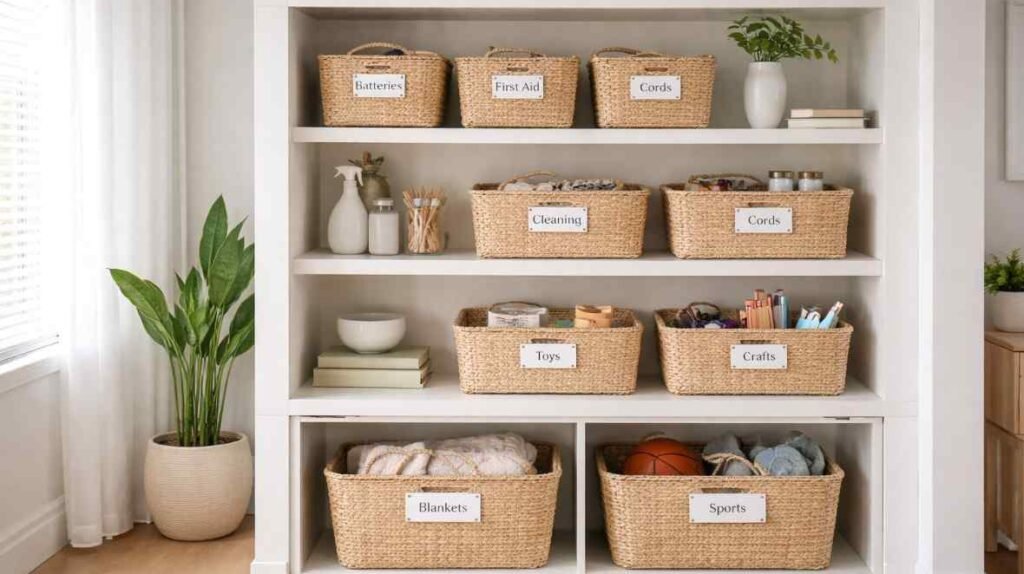
The living room collects everyday clutter without you realizing it. Remotes, blankets, and small items tend to scatter. I use a basket for soft items and a small container for electronics. Keeping surfaces minimal made the space feel calmer without removing comfort.
Bedroom And Closet Simplified
Bathroom Space Saving Fixes
Bathrooms are small, so clutter becomes noticeable quickly. I keep daily essentials accessible and store backups separately. Adding small containers and using vertical space made everything easier to manage.
How To DIY for Clutter-Free Living Step By Step

I always begin with one small area instead of trying to fix everything at once. Starting small makes the process easier and more realistic to finish. Next, I take everything out and sort it into categories. I keep what I use regularly and remove what I no longer need. This step alone reduces most clutter.
Then, I create simple storage using items I already own. Boxes, jars, or baskets work perfectly to group similar items together. I place frequently used things where they are easy to reach. Finally, I maintain the system by putting things back after use. This simple habit keeps everything organized without extra effort.
Daily Habits That Keep Things Organized
Staying organized is more about habits than big cleaning sessions. Small actions throughout the day prevent clutter from building up again.
I spend a few minutes each evening resetting the living rooms. This keeps everything under control and makes mornings feel easier. Putting things back immediately also helps. It takes only seconds but saves time and effort later.
Mistakes That Make Clutter Worse
Buying Storage Too Early
It is easy to think more storage will solve the problem, but it often creates more clutter. Decluttering first helps you understand what you actually need.
Trying To Do Everything At Once
Taking on too much can feel overwhelming and lead to burnout. Focusing on one space and staying focused at a work makes progress more manageable and sustainable.
Keeping Things “Just In Case”
Holding onto items you rarely use adds unnecessary clutter. If something has not been used in a long time, it is usually safe to let it go.
Frequently Asked Questions
1. How do I start DIY for clutter-free living?
Start small with one area and remove what you do not need first. Then create simple storage using items you already have.
2. Do I need to buy storage products?
No, you can use boxes, jars, or baskets you already own. Focus on function first before buying anything new.
3. How do I keep my home clutter-free daily?
Spend a few minutes resetting your space and return items after use. Small habits prevent clutter from building up again.
4. What is the easiest area to organize first?
Begin with a space you use daily like the kitchen or bedroom. Quick results here help build momentum.
A Simpler Way To Stay Organized
DIY for clutter-free living is not about doing more. It is about doing things in a way that feels natural and easy to maintain. Once I focused on small changes and simple habits, my home stayed organized without constant effort. The difference is not perfection, but consistency.