

Most people think decluttering means spending an entire weekend cleaning the house, pulling everything out of closets, and creating a bigger mess than before. That’s usually why beginners quit halfway. Decluttering is less about cleaning and more about making small decisions consistently. Once I understood that, organizing a home stopped feeling overwhelming and started feeling manageable.
The biggest mistake beginners make is trying to organize before decluttering. Storage bins, organizers, and shelves won’t fix clutter if there’s too much stuff. The real goal is to reduce what you own first, then organize what remains. Once you approach decluttering step by step, the process becomes much easier and far less stressful.
Start Small So You Don’t Get Overwhelmed
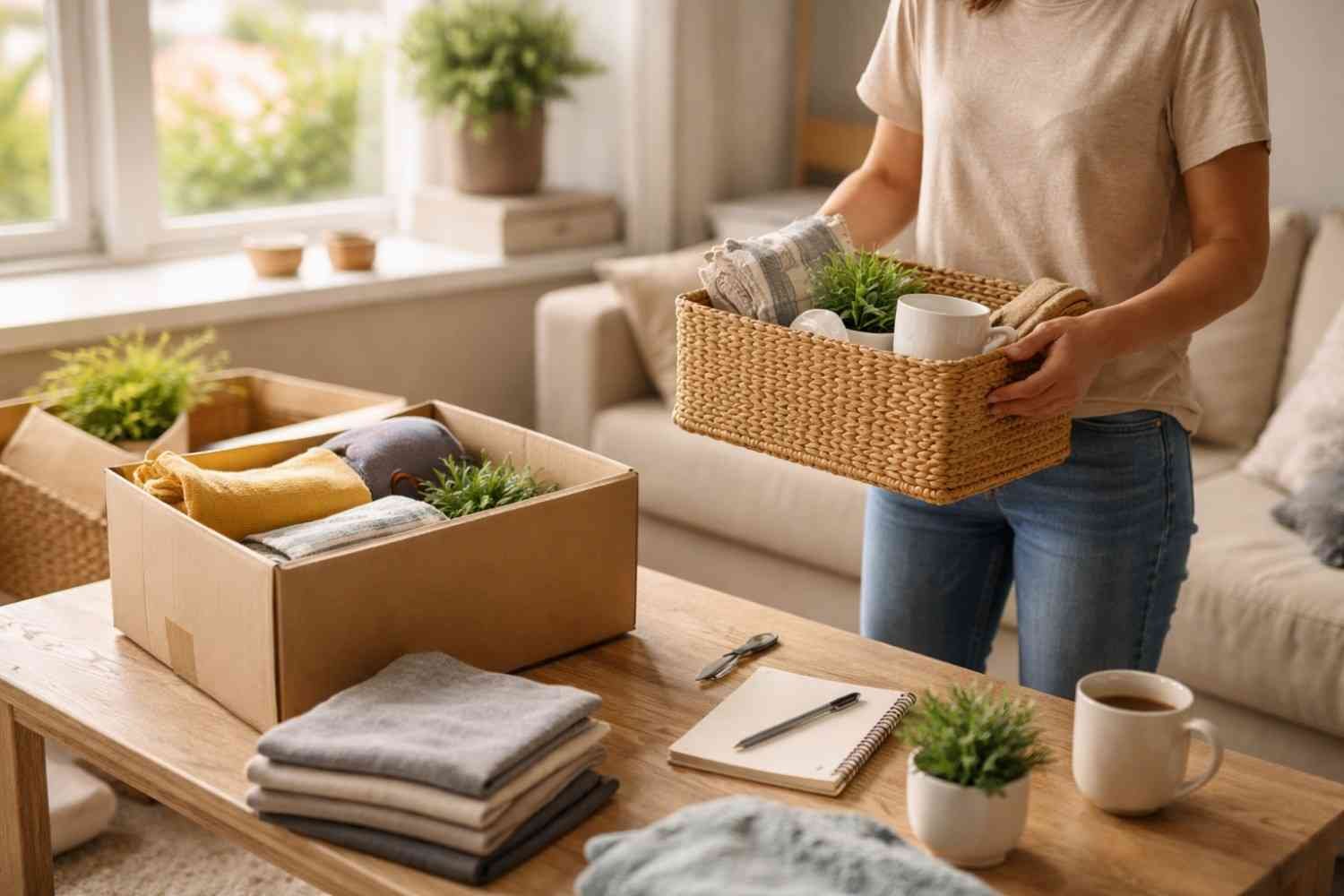
One of the most effective beginner declutter steps is starting small. Trying to declutter an entire house in one day leads to burnout and decision fatigue. Instead, begin with a small area like a drawer, a nightstand, a bathroom shelf, or a single closet section.
Small wins create momentum. When you finish one small space, you feel motivated to continue. Decluttering works best when it becomes a habit rather than a one-time cleaning project. Even spending 10 minutes a day removing clutter can completely change a home in a few weeks.
Many people who successfully maintain a clutter-free home follow a simple rule: declutter one small space every day instead of waiting for a big cleaning day.
Use The Four-Box Decluttering Method
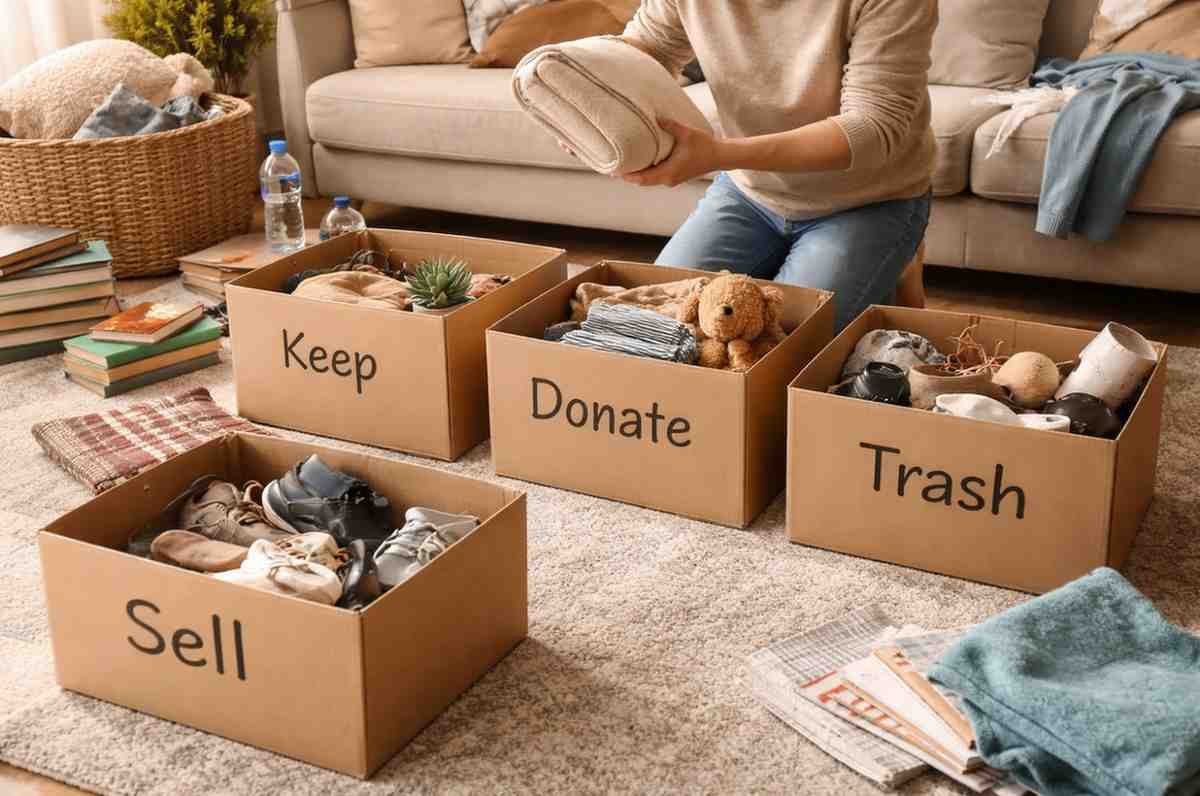
Before you start removing items, set up a simple sorting system. This is one of the most important steps in decluttering for beginners because it makes decision-making faster and easier.
Create four boxes or bags and label them:
- Keep
- Donate / Sell
- Trash / Recycle
- Relocate (belongs in another room)
This system prevents piles from forming and helps you make quick decisions. Every item you touch must go into one of these boxes. This method is used in many home organization tips because it keeps the process structured and prevents items from being moved around without purpose.
Choose A Simple Decluttering Strategy

If you don’t have a plan, decluttering becomes confusing and slow. Beginners should use simple decluttering methods that are easy to follow and repeat.
Here are a few beginner-friendly strategies:
- The 5-Minute Declutter – Set a timer for five minutes and declutter one small area
- The 12-12-12 Method – Find 12 items to throw away, 12 to donate, and 12 to return to their place
- Room-By-Room Method – Focus on one room at a time instead of the entire house
- One Shelf At A Time – Perfect for closets and kitchen cabinets
These methods help you start decluttering your shopping behavior without overthinking the process.
Ask Simple Questions While Sorting Items
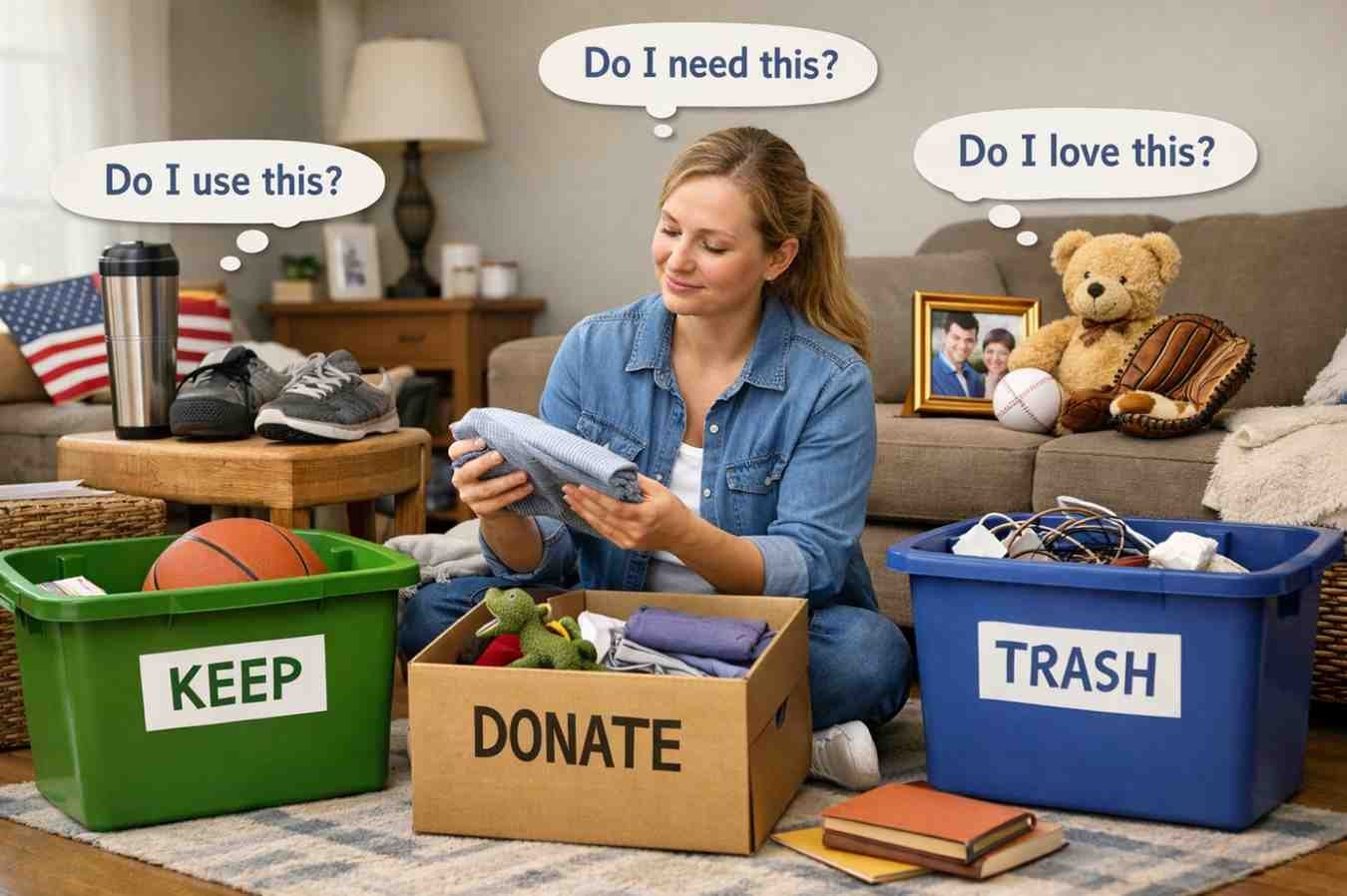
Many people struggle with decluttering because they don’t know what to keep and what to remove. Instead of overthinking every item, use simple rules to make decisions faster.
When picking up an item, ask yourself:
- Have I used this in the last 6 months?
- Would I buy this again today?
- Does this item have a specific place in my home?
- Do I own duplicates of this?
- Can this be replaced easily if needed?
If the answer to most of these questions is no, it’s usually time to donate or remove the item. This step alone can significantly reduce clutter in a home.
Create A Home For Everything You Keep
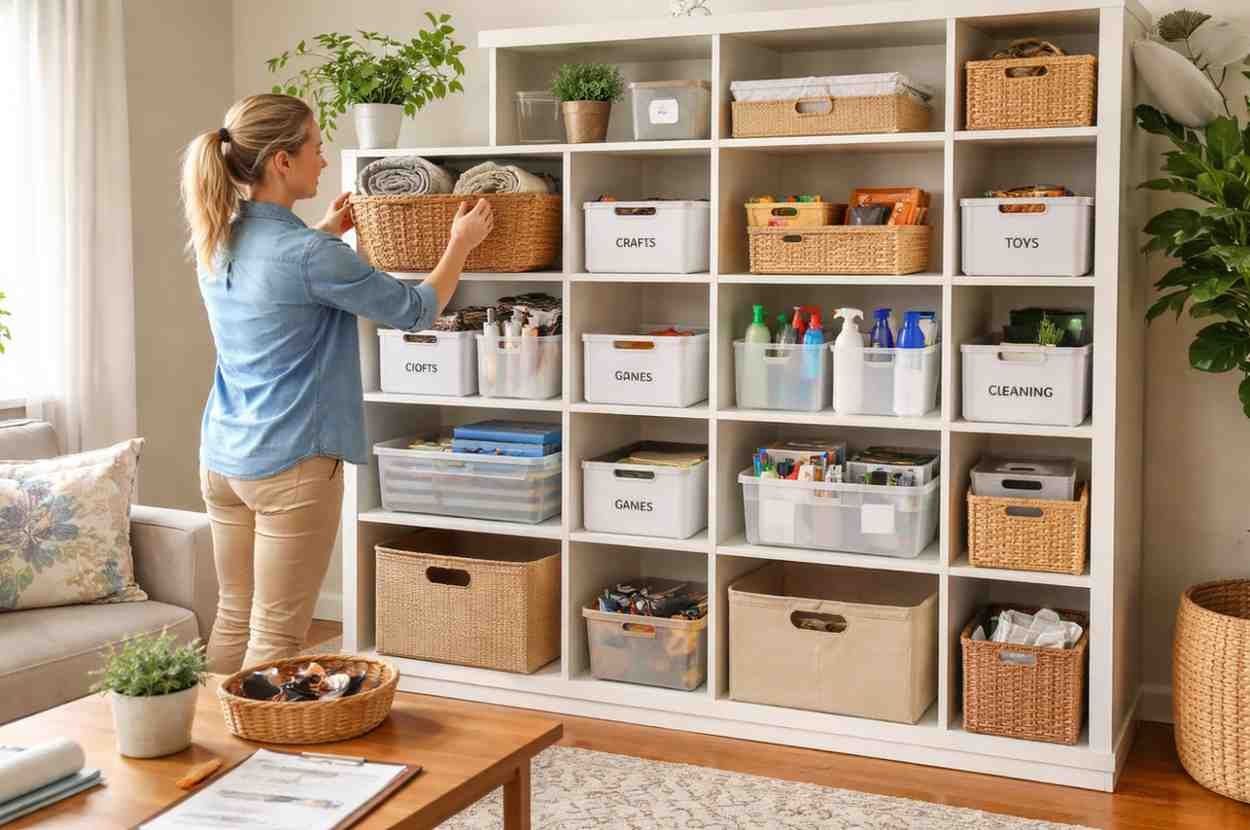
Decluttering does not end when you remove items. The next step is organizing your home so clutter does not return. Every item you keep should have a designated place. If something does not have a place, it will eventually become clutter again.
A simple home organization rule many people follow is “group like with like.”
Keep similar items together so you always know where to find them. For example, keep all tools in one toolbox, all documents in one folder system, and all cleaning supplies in one storage area.
When everything has a place, organizing your home becomes much easier, and cleaning takes less time.
Use The One-In One-Out Rule To Prevent Future Clutter
One of the best ways to maintain a tidy home after decluttering is the one-in, one-out rule. This means every time you buy something new, you remove one old item from your home.
This rule works especially well for:
- Clothes
- Shoes
- Kitchen items
- Books
- Electronics
- Home decor
Most clutter comes from items entering the home faster than items leaving. Once you control what comes into your home, clutter stops building up.
FAQs: Beginner Declutter Steps To Finally Get Your Home Organized
1. How do beginners start decluttering?
Beginners should start with small areas like drawers, shelves, or closets and use the keep, donate, trash, and relocate method to sort items quickly and avoid feeling overwhelmed.
2. How long does it take to declutter a house?
Decluttering a home can take a few weeks to a few months, depending on the amount of clutter, but doing small sections daily makes the process easier and more manageable.
3. What should I declutter first?
Start with easy areas like bathrooms, junk drawers, kitchen cabinets, or closets. Avoid starting with sentimental items because they take longer to decide on.
4. How do I stop clutter from coming back?
Use the one-in-one-out rule, assign a place for every item, and spend 10 minutes daily putting things back where they belong.
Final Thoughts
Decluttering is not really about throwing things away. It’s about deciding what deserves space in your home and what doesn’t. Most people hold onto items because they might need them someday, but that someday rarely comes. When you remove unnecessary items, your home becomes easier to manage, easier to clean, and less stressful to live in. The goal is not a perfect house, but a functional and peaceful space where everything has a place.
Start small, stay consistent, and focus on progress instead of perfection. Small steps done regularly always work better than big plans that never start.